
If you’ve ever paused in your garden to watch a Japanese maple shift from delicate spring buds to blazing autumn foliage, you know it’s a front-row seat to nature’s art. We’ve been fascinated by what we’ve learned from both scientific sources and long-standing growers. Just as The Spruce explains the dramatic color variety in Japanese maples, and CID Bio-Science highlights how environmental cues (sunlight, temperature, soil) influence leaf pigments, we at Herter Nursery want to share a deep dive into how these trees evolve through each season. Let’s wander through the year together and explore what makes Japanese maples so endlessly captivating.
Spring: Awakening & Aspiration
When spring arrives, Japanese maples emerge from their dormancy most poetically. Buds swell, leaflets begin unfurling, and for many cultivars the first leaves come in shades of lime green, coral, soft reds, purples, variegated tones—depending on variety. The fresh foliage often carries a luminous quality, bright and almost translucent in the new sun. From what we’ve seen and what’s documented on japanesemaple.net, this is also the time when flowering (in some species) begins, though the blooms are often subtle, giving way to those samaras (winged seeds) that follow.
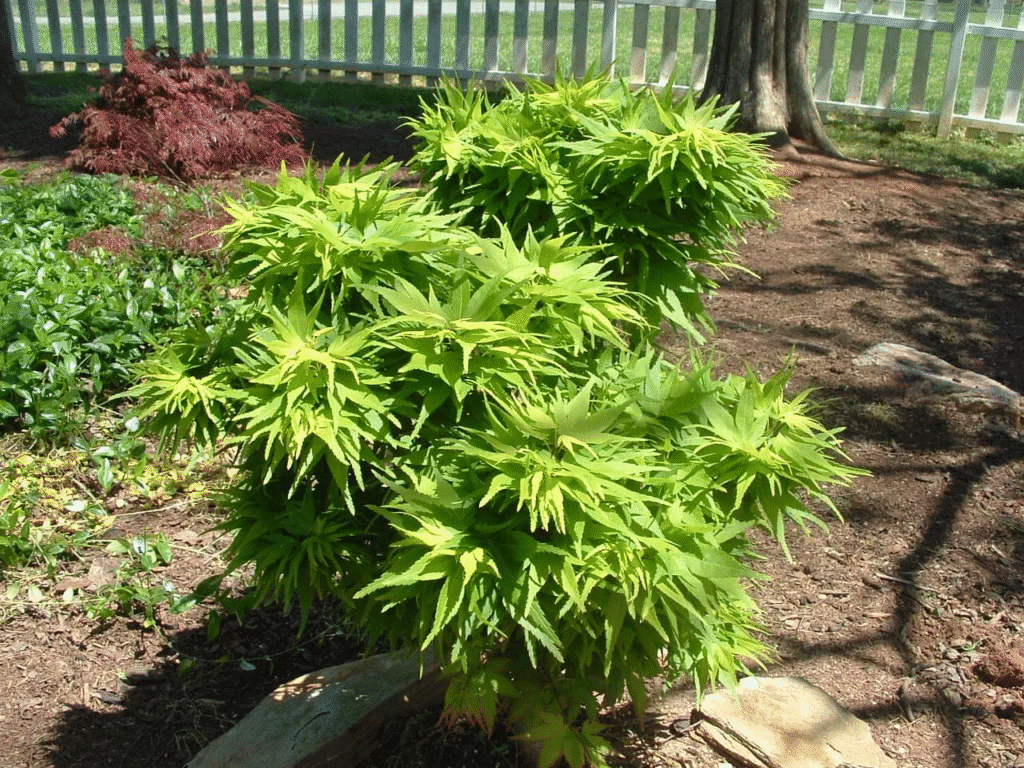
Spring is also when growth is fastest: roots are reestablishing, twigs elongate, and we see early shaping happening, especially in young trees (1-3 years old). Lighter pruning to guide structure, mulching to retain moisture, and careful monitoring for pests like aphids and caterpillars are on the agenda. Too much nitrogen or too much sun signals can lead to leaf scorch even in spring, so moderation is key.
Summer: The Showcase of Green & Shade
Once spring’s fireworks settle, summer is about steadiness. Foliage has matured; leaf colors often deepen or shift. Many red or purple cultivars (like Bloodgood or Tamukeyama) retain their darker hues, though in very hot or bright sun, parts may fade or get sunburned. Green-leafed varieties may glow a lighter, more vibrant green.
Shading becomes more important now: afternoon sun can be tough on delicate or laceleaf cultivars. Soil moisture is critical—roots are shallow and can dry out; deep watering, mulching, and keeping soil cool help. Also, summer is not the time for heavy pruning (it stresses the tree), but you can lightly tidy up or remove dead wood.
Fall: Nature’s Grand Finale
If summer is steady, fall is explosive. As the daylight shortens and nights cool, chlorophyll breaks down, allowing underlying pigments to shine. Reds, oranges, crimsons, yellows, and even bronzes, depending on the variety. Some varieties like Osakazuki and Seiryu are known for going all out in autumn; others maintain rich red tones throughout.
Fall is not just about color, though. It’s about preparation. Leaves drop, energy shifts from foliage to roots. We recommend cleaning fallen leaves around the base (to prevent rot or disease), checking soil pH and nutrients, and light pruning to maintain structure. Also, ensuring that the tree isn’t water-stressed entering winter is important—they need stored moisture.

Winter: Form, Structure & Dormancy
When leaves are gone, what remains is what many lovers of Japanese maples prize most: the skeleton, the silhouette, the bark, and the branch patterns. Some cultivars have colored bark or interesting branching that becomes focal when snow or frost outlines them. We see mature trunks thickened, branches exposed, the true architecture revealed.
Winter is a resting season, but not totally hands-off. Young trees or those in pots may need protection from frost, wind, sunscald (sun striking pale winter bark), and drying. Mulch around the base insulates roots. In cold climates, a deep watering before ground freeze helps. Watch for winter damage: broken or frost-cracked branches, discolored bark. The winter months are also when heavier pruning (removing crossing limbs, dead wood) is safest.
Varieties & Growth Phases: How Form Influences Seasonal Drama
Of course, not all Japanese maples are equal in what they show and when. Laceleaf varieties (weeping, finely cut foliage) often have more delicate spring and summer colors, more shade sensitivity, and may show dramatic fall contrasts. Upright growers may be more robust, retaining coloration through summer. Mature trees tend to have deeper, more consistent seasonal color and stronger silhouette in winter than saplings.
Also, genetics play a huge part: how red a cultivar stays, when it changes, and how long color holds depends on the specific variety. But environment (sunlight, soil, water) and care (mulching, frost protection, pruning) modulate how spectacular each season turns out. Sources like The Spruce and extension garden sites affirm this.
Bringing It All Together: Seasonal Care Tips (Summary)
- Spring: moderate sun, good water, low-nitrogen fertilizers, protect new growth
- Summer: guard against heat & sunburn, keep soil moist, light shade when needed
- Fall: clean up leaves, soil prep, feed lightly, avoid letting drought stress set in
- Winter: root insulation, protect young trees, inspect & prune structurally
By following these shifts, we ensure each season brings its own moment of glory with our Japanese maples.
Why We Love Them All Year
Because Japanese maples don’t just survive the seasons—they fluidly transform with them. Spring brings hope and new beginnings; summer brings lush structure; fall brings drama; winter brings grace. Across years, these transitions make them deeply satisfying garden partners. Watching them mature, seeing the structure sharpen, the colors intensify, is one of the joys we get to share with you.
Discover Your Perfect Japanese Maple Today
At Herter Nursery, a family-owned business since 1993 by John and Carol Herter, we specialize in rare Japanese Maple for sale. Browse our collection if you’re looking for a Japanese maple tree, fireglow Japanese maple, orangeola Japanese maple, or large Japanese maple tree for sale. Check our shop or explore the Maple of the Month Club. Don’t miss our seasonal deals in Japanese Maple Specials: they include varieties like bloodgood Japanese maple and tamukeyama Japanese maple for sale. To talk with us directly or get personalized advice, contact us.