Some small trees disappear into a planting once the surrounding shrubs fill in. Tamukeyama tends to do the opposite. Its branches spread outward, then fall in soft layers, keeping the canopy low enough for the foliage and branch structure to remain easy to see.
That habit is a major reason gardeners search for a Tamukeyama Japanese Maple for sale when a planting area needs a defined focal point. The tree offers a broad, cascading shape without the height of many upright maples, which makes placement around patios, paths, beds, and water features easier to plan.
The Form Does Much of the Work
Tamukeyama is a dissected form of Acer palmatum with a mound-shaped habit and weeping branches. Mature specimens are commonly listed at about 6 to 8 feet tall with an 8 to 12-foot spread. That ratio matters because the tree often occupies greater horizontal space than its height suggests.
A Tamukeyama Japanese Maple for sale may look compact when young, but its branching pattern becomes wider and fuller with age. Giving that structure room from the beginning allows the tree to keep its natural outline instead of requiring frequent corrective pruning later.
Laceleaf Foliage Changes the View Up Close
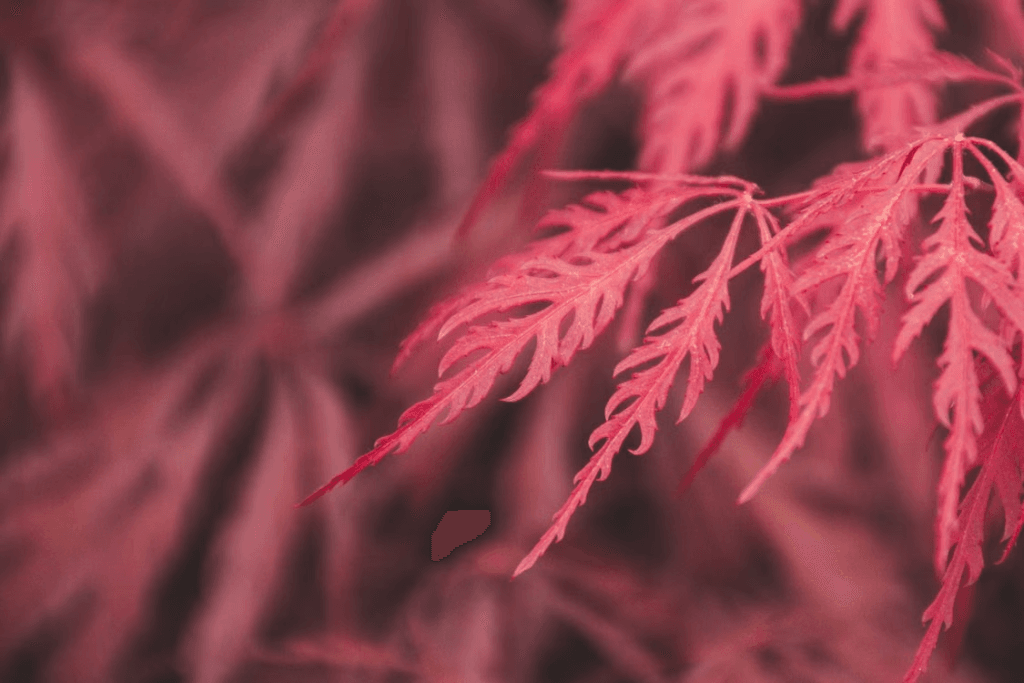
The leaves are deeply cut and finely divided, which gives the canopy a lighter texture than broadleaf Japanese maples. Gardeners comparing a lace leaf Japanese maple for sale may first notice the red color, but the leaf shape gives Tamukeyama much of its close-range appeal.
A Tamukeyama Japanese Maple for sale carries purple-red foliage through much of the growing season and shifts toward a brighter red in fall. Its foliage also holds good color through summer, giving the tree interest well before autumn arrives.
Patios, Paths, and Water Features Suit Its Shape
A cascading tree is easiest to appreciate when the side profile remains visible. A weeping Japanese maple for sale placed behind tall shrubs can lose much of that effect because the lower branches disappear from view. A Tamukeyama Japanese Maple for sale benefits from a site where nearby paths or seating can see the canopy.
Open beds, patio edges, walkways, rock gardens, and pond areas give Tamukeyama a clearer setting. Its dissected foliage and falling branches are especially suitable near water, where the canopy can be viewed from several angles. A Tamukeyama Japanese Maple for sale also works well beside seating areas because its detail can be seen without standing far away.
Width Deserves Attention Before Planting
The planting hole may be small, but the future canopy is not. A red laceleaf weeping Japanese maple can eventually spread across several feet, so consider nearby walls, paths, fences, and shrubs before planting.
A Tamukeyama Japanese Maple for sale needs enough open width for the branches to extend naturally. Crowding can hide the dome-shaped habit and may lead to unnecessary pruning. Clear space around the canopy also helps the tree maintain the form that makes this cultivar recognizable.
Tamukeyama and Crimson Queen Have Different Profiles
A Tamukeyama Japanese Maple for sale and a crimson queen laceleaf japanese maple are often compared because both have red dissected foliage and cascading branches. Crimson Queen is commonly described as rounded, slow-growing, and shrubby, with mature dimensions around 8 to 10 feet tall and 10 to 12 feet wide.
Tamukeyama usually stays somewhat lower while maintaining a broad spread. When considering a Tamukeyama Japanese Maple for sale alongside Crimson Queen, mature shape and available space can be stronger deciding factors than leaf color alone.
Good Siting Helps the Leaves Stay Healthy
A Tamukeyama Japanese Maple for sale prefers moist, organically rich, slightly acidic, well-drained soil. In hotter parts of its growing range, some afternoon shade can help reduce leaf scorch. Dry soil, strong sun, and drying winds can be hard on the finely divided foliage.
The same care points matter when selecting any laceleaf maple for sale. Tamukeyama is generally listed for USDA Zones 5 through 8, and steady moisture with good drainage gives the roots a better setting for establishment. A Tamukeyama Japanese Maple for sale still benefits from careful watering during its early seasons after planting.
Let the Tree Keep Its Natural Character
Tamukeyama becomes easier to appreciate as its canopy fills out and the cascading branches gain width. A suitable location keeps the red foliage, fine leaf texture, and low form visible through the growing season.
For gardeners considering a Tamukeyama Japanese Maple for sale, the strongest results usually come from choosing the planting site with the mature canopy in mind rather than treating the tree as a temporary accent.
Gardeners can browse Herter Nursery’s Tamukeyama japanese maple for sale selection for current graft availability.