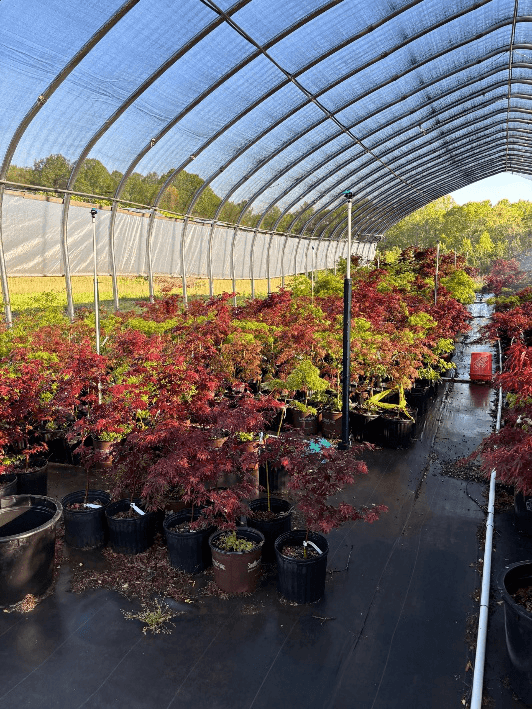
Not every landscape has room for a massive ornamental tree, but that doesn’t mean homeowners have to give up on growing Japanese maples. One of the reasons these trees remain so popular is their versatility. Many varieties adapt beautifully to patios, balconies, compact gardens, and even decorative containers when cared for properly.
At our nursery, we regularly work with customers who want the beauty of Japanese maples in smaller outdoor spaces. With the right variety, container setup, and maintenance routine, these trees can thrive for years while bringing structure, color, and seasonal interest to even the smallest environments.
Why Japanese Maples Work Well in Small Spaces
Japanese maples naturally offer a wide range of growth habits and mature sizes. While some varieties eventually become large focal trees, others remain compact and manageable for decades.
This flexibility makes them ideal for urban landscapes, courtyard gardens, and patio settings where planting space is limited. Many compact varieties also develop slowly, allowing homeowners to enjoy their shape and structure without constant pruning or aggressive maintenance.
We often recommend small Japanese maple trees for homeowners who want long-term ornamental value without overwhelming the surrounding space.
Choosing the Right Variety
The first step to success is selecting a maple suited for container or compact growing conditions. Smaller laceleaf varieties and dwarf upright forms are often the best choices because they maintain proportion naturally.
Compact cultivars such as Shaina, Mikawa Yatsubusa, and smaller laceleaf forms work exceptionally well in decorative containers. Their slower growth habits allow them to stay balanced without becoming oversized too quickly.
For homeowners interested in highly artistic planting styles, a red maple bonsai tree can provide the same elegant foliage and seasonal color in an even more compact presentation.
Choosing the correct variety from the beginning reduces maintenance and improves long-term performance.
Container Selection Matters
One of the biggest mistakes we see is using containers that are either too small or poorly drained. Japanese maples need enough root space to establish healthy growth, but they also require excellent drainage to prevent root rot.
We recommend containers with multiple drainage holes and enough width to support future root development. Materials such as ceramic, resin, or thick wood containers often provide better insulation against extreme temperature changes than thin plastic pots.
The container itself also becomes part of the visual design, especially on patios or balconies where the tree serves as a focal feature.
Using the Right Soil Mix
Japanese maples perform best in loose, well-draining soil. Standard garden soil is usually too compact for container growing and may hold excessive moisture around the roots.
We typically recommend high-quality potting mixes blended with organic material to improve drainage while still retaining enough moisture for healthy root growth.
Healthy soil is especially important for acer palmatum varieties grown in containers because root systems are more exposed to environmental changes compared to trees planted directly in the ground.
A balanced soil mix helps stabilize moisture levels and supports healthier long-term growth.
Watering in Containers
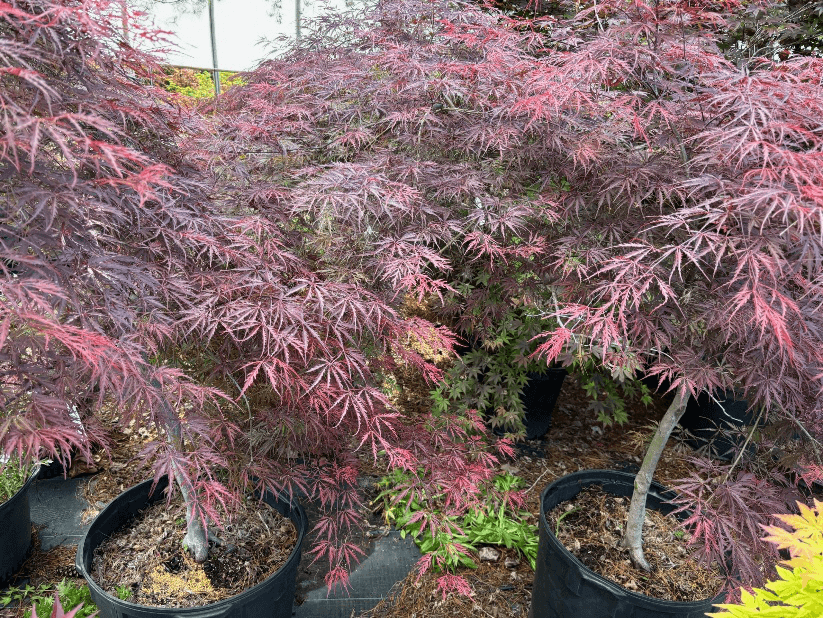
Container-grown maples require more consistent watering than trees planted in the landscape. Pots dry out faster, especially during hot weather or windy conditions.
However, consistency matters more than frequency. We encourage deep watering that fully saturates the root zone rather than frequent shallow watering.
During summer, containers may need to be checked daily depending on climate and sun exposure. In cooler months, watering should be reduced to avoid overly wet soil conditions.
Mulching the soil surface can also help retain moisture and regulate root temperature in exposed patio environments.
Sunlight and Placement Tips
Proper placement is critical for container-grown Japanese maples. Most varieties prefer morning sun with afternoon protection, especially in warmer climates.
Balconies and patios with reflected heat from walls or concrete can intensify sunlight exposure, increasing the risk of leaf scorch. In these situations, filtered light or partial shade often produces healthier foliage and better color retention.
We frequently advise homeowners to observe how sunlight moves across their outdoor space before choosing a permanent location for the tree.
Seasonal Care and Winter Protection
Container-grown maples experience temperature fluctuations more intensely than landscape-planted trees because their roots are more exposed.
In colder climates, containers may need additional insulation during winter. This can include moving pots closer to sheltered walls, wrapping containers, or temporarily relocating smaller trees to protected areas.
Even a small Japanese maple tree can develop strong long-term health when seasonal root protection is handled properly.
In warmer climates, the focus shifts toward protecting roots from excessive summer heat and maintaining stable moisture levels.
Pruning and Long-Term Maintenance
One of the advantages of growing Japanese maples in containers is that they generally require minimal pruning. We focus mainly on removing damaged branches and preserving the natural shape of the tree.
Compact varieties naturally maintain proportion better than vigorous upright forms, reducing the need for aggressive shaping.
For bonsai-inspired specimens, pruning becomes more artistic and deliberate, helping maintain scale and branch structure over time.
Patience is important, as Japanese maples often become more visually striking as their branching matures.
The Beauty of Japanese Maples in Urban Spaces
One of the most rewarding aspects of container-grown maples is how effectively they transform smaller outdoor environments. A single well-placed maple can soften hard architectural lines, introduce seasonal movement, and create a more relaxing atmosphere.
Even patios and balconies with limited square footage can feel layered and dynamic when ornamental trees are incorporated thoughtfully.
At our nursery, we’ve seen compact Japanese maples completely redefine small outdoor spaces by adding texture, color, and natural structure.
Bring Japanese Maple Beauty to Any Space
We believe homeowners should be able to enjoy Japanese maples regardless of property size. Whether someone is designing a small courtyard, decorating a patio, or creating a balcony garden, the right tree can provide years of beauty in a compact setting.
At Herter Nursery, we grow a wide range of Japanese maples suited for containers, small gardens, and ornamental patio displays. From compact upright varieties to laceleaf forms and bonsai-style options, our trees are selected for strong structure and long-term performance.
Customers can explore our collection and confidently order Japanese maple tree selections directly from our family farm. With proper care and placement, even the smallest space can become home to a stunning Japanese maple that grows more beautiful every season.