At Herter Nursery, we’ve spent over three decades grafting, growing, and shipping Japanese maples to gardeners across the country. We’ve seen our trees thrive in every type of setting, from city balconies to sprawling landscapes. But we’ve also seen what can go wrong when a tree is planted without the right preparation.
The good news is that most problems with Japanese maples are preventable. With the right soil, placement, and care, these trees can live for generations. Below, we’ll share the most common mistakes people make and our best advice for planting success.
Mistake #1: Planting Too Deep
One of the fastest ways to stress or kill a maple is burying its trunk below the soil line. Japanese maples prefer to have their root flare—where the trunk meets the roots—sitting just above the soil surface. If the trunk is buried, the tree struggles to breathe and becomes vulnerable to rot.
Our advice: Dig your hole no deeper than the root ball, but make it twice as wide. Set the tree so the root flare is visible and slightly elevated. Backfill gently with the same soil you removed, not heavy amendments.
This tip applies whether you’re planting a compact crimson queen laceleaf Japanese maple or a large Japanese maple tree. Always check the flare before you water in.
Mistake #2: Ignoring Drainage
Japanese maples love moisture but cannot sit in waterlogged soil. Planting in a low spot or heavy clay without amending will suffocate the roots.
Our advice: Test drainage by filling the planting hole with water. If it hasn’t drained within a few hours, improve the soil. Mix in compost or create a raised mound. For containers, always use pots with drainage holes and high-quality potting mix.
This is especially important for delicate varieties like ukigumo Japanese maple or orangeola Japanese maple for sale, which show stress quickly in soggy soil.
Mistake #3: Over-Fertilizing
More is not better when it comes to feeding Japanese maples. Heavy fertilizer use pushes unnatural growth, which can weaken the tree and dull its natural color.
Our advice: Fertilize lightly in spring with a balanced, slow-release formula. One application is usually enough. Avoid quick-release products, which can burn the roots.
Remember, a bloodgood Japanese maple or emperor Japanese maple doesn’t need help to deliver strong red tones—overfeeding often does more harm than good.
Mistake #4: Choosing The Wrong Location
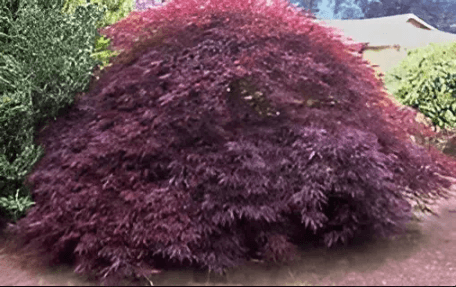
Planting a maple in the wrong light conditions leads to leaf scorch, faded colors, or poor growth. Upright reds like fireglow Japanese maple for sale can tolerate more sun, while laceleaf weepers such as tamukeyama Japanese maple prefer dappled light.
Our advice: Match the variety to your site. Upright trees like red dragon Japanese maple tree or emperor Japanese maple are excellent for open areas with morning sun. Cascading varieties like waterfall Japanese maple for sale thrive best with protection from hot afternoon rays. Always consider your climate zone as well.
Mistake #5: Forgetting About Airflow
Crowded plantings can trap humidity and invite pests. While Japanese maples are hardy, they do best with good air circulation around their canopies.
Our advice: Give your tree space to grow naturally. If you’re tucking in small Japanese maple trees for sale among evergreens, leave room for air movement. For mature Japanese maple tree specimens, make sure neighboring shrubs aren’t competing for the same root space.
Mistake #6: Neglecting Aftercare
Planting is only the beginning. Skipping mulch, inconsistent watering, or forgetting to check for stress can undermine all your effort.
Our advice: Apply a 2–3 inch mulch ring around the base, keeping it away from the trunk. Water consistently, especially in the first two years, but don’t overdo it. Check leaves during heat waves, slight wilting means your tree needs attention.
This is vital if you’re investing in rare Japanese maples for sale or grafted Japanese maple trees, which deserve careful monitoring while they establish.
Grow With Confidence
Planting a Japanese maple should be the start of a lifelong relationship with a tree that only gets more beautiful over time. By avoiding these common mistakes—planting too deep, ignoring drainage, over-fertilizing, or choosing the wrong site—you’re giving your tree the foundation it needs to thrive.
At Herter Nursery, we’ve been growing Japanese maples since 1993. From acer plants perfect for patios to large bloodgood Japanese maple specimens for major landscape features, we’re here to help you pick, plant, and grow with confidence.
If you’re ready to bring home a new treasure, explore our wide range of acer trees for sale and let us guide you to the right choice for your space. Order today, plant with care, and enjoy the rewards for generations.